
How Much Does a House Extension Cost in Gillingham? | Local Builder’s Guide
A house extension is one of the most effective ways to gain the space your family needs without leaving the home and location you have chosen. In Gillingham, where property prices have grown steadily as the Medway towns become increasingly popular with commuters and young families, the costs of moving — stamp duty, estate agent fees, solicitor costs, and the upheaval itself — easily run into tens of thousands. Extending your existing home puts that money directly into usable space and property value rather than handing it to agents, lawyers, and the taxman.
But extension costs vary depending on what you are building, how large it is, what specification you choose, and what your specific property requires. Gillingham’s housing stock adds its own considerations — the dense Victorian and Edwardian terraces through the town centre, the inter-war and post-war estates across the established residential areas, and the newer developments all present different building challenges and different opportunities. This guide sets out realistic prices, explains what drives the cost, and helps you budget with confidence.
Single Storey Extension Costs
A single storey rear extension is the most popular project we build across Gillingham. It adds ground floor space for a larger kitchen-diner, an expanded living area, a home office, or a ground floor bedroom without the cost and complexity of building upward.
A modest rear extension of around three metres deep across a standard semi or terraced house typically costs between £20,000 and £32,000. This covers foundations, brickwork, roof, doors, plastering, electrics, flooring, and decoration to a habitable standard. The semi-detached and terraced properties across Gillingham’s established residential streets — through Twydall, Rainham, and the housing around Gillingham Park — suit this size of extension well.
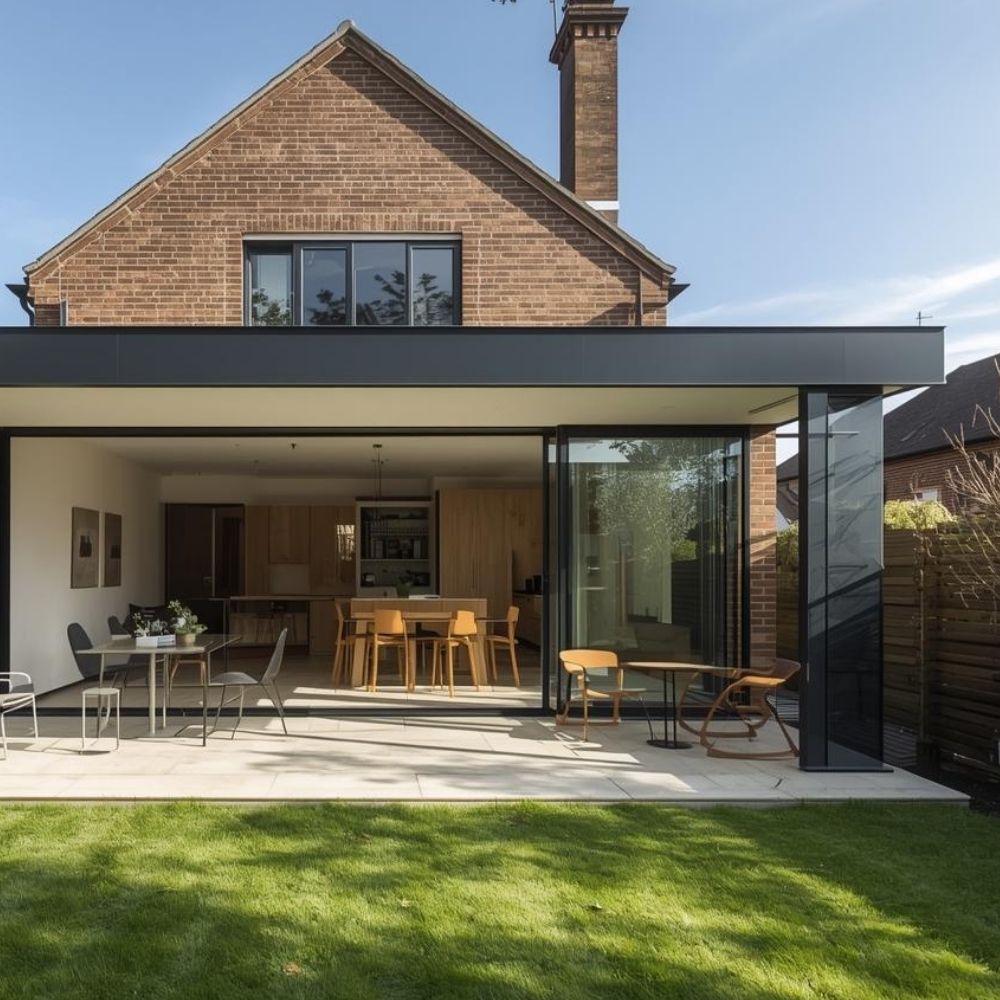
A larger extension of four to six metres with quality aluminium bi-fold doors, skylights or a roof lantern, underfloor heating, and a fully fitted kitchen typically costs between £32,000 and £52,000. This is the most common bracket for Gillingham homeowners creating open-plan kitchen-diners that transform how the ground floor works — turning two cramped separate rooms into one flowing space for cooking, eating, and family life.
A premium specification with large-format sliding doors, structural glazing, stone or porcelain flooring, underfloor heating throughout, and a high-end kitchen installation reaches £52,000 to £70,000. The larger detached properties across Hempstead, Wigmore, and the surrounding areas typically commission extensions at this level where the investment matches the property value.
Double Storey Extension Costs
When you need space on both floors, a double storey extension delivers the best value per square metre. Building two storeys shares foundations, walls, and roof structure across both levels, costing significantly less per square metre than constructing the same total area as separate single storey projects.
A double storey rear extension in Gillingham typically costs between £32,000 and £62,000 depending on size and specification. The ground floor usually provides an enlarged kitchen-diner or living space while the first floor adds one or two bedrooms, a bathroom, or an ensuite above.
The cost per square metre makes the value clear. Single storey works out at £1,600 to £2,300 per square metre. Double storey comes in at £1,200 to £1,800 per square metre because the expensive elements — foundations, groundwork, scaffolding — only happen once regardless of how many storeys sit above them.
Double storey extensions require planning permission through Medway Council. The design needs careful consideration of impact on neighbouring properties, overlooking, and light to adjacent homes — particularly relevant on Gillingham’s denser residential streets where properties sit close together.
Side Return and Wrap-Around Extensions
Many of Gillingham’s Victorian and Edwardian terraces — particularly through the town centre, along Watling Street, and into the older residential streets — have narrow side passages that serve no practical purpose beyond housing bins and catching debris. Extending into this unused strip adds valuable width to the ground floor without consuming any garden space.
A side return extension typically costs between £14,000 and £26,000. Even a modest side return transforms a cramped galley kitchen into a room with genuine breathing space and the width to accommodate a dining table alongside the cooking area.
Combining a side return with a rear extension creates a wrap-around — an L-shaped addition that maximises the ground floor footprint in one coordinated project. Wrap-around extensions typically cost between £28,000 and £50,000 and deliver the most dramatic ground floor transformations available. The kitchen goes from the smallest room in the house to the largest — a flowing space that becomes the centre of family life.
What Affects the Cost?
Size is the most straightforward variable. Extension costs work roughly on a per-square-metre basis, with the rate decreasing slightly on larger projects because certain fixed costs — scaffolding, skip hire, building control fees — do not scale proportionally with the floor area.
Ground conditions matter across Gillingham. The Medway area sits on a mix of clay, chalk, and alluvial deposits depending on the specific location. Properties closer to the river and on lower ground may encounter higher water tables or softer subsoil that requires deeper or engineered foundations. Properties on the higher ground through Hempstead and Wigmore typically sit on more stable chalk. Your builder should assess ground conditions during the initial visit and factor any additional foundation requirements into the quote rather than discovering them once the trench is open.
The rear opening has a significant impact on both the cost and the daily experience of the finished room. Standard patio doors cost between £800 and £1,500. Quality aluminium bi-fold doors spanning three to four metres typically cost £3,000 to £6,000. Large-format sliding doors can reach £5,000 to £8,000. The difference in how the finished room connects with the garden is substantial — bi-fold doors opening the entire rear wall onto the garden transform the room in a way that standard patio doors simply cannot replicate.
Roof design affects both cost and character. A flat roof with a membrane finish is the most common and affordable option for single storey extensions. Adding a roof lantern brings natural light into the centre of deeper extensions where it is furthest from the rear doors and existing windows. A pitched roof matching the existing house costs more but creates a more traditional appearance that suits some Gillingham properties better.
Internal specification covers everything from the kitchen installation and flooring to the heating system and decoration quality. This is where the widest cost variation sits and where being clear about your priorities before requesting quotes makes the biggest difference to getting comparable prices.
Proximity to neighbours on Gillingham’s denser residential streets affects both design and cost. Extensions close to boundary walls may need specific foundation designs to avoid undermining adjacent properties. Party wall agreements with neighbours add surveyor fees of £700 to £1,500 per neighbour and a statutory notice period that needs building into the programme.
Planning Permission
Single storey rear extensions benefit from generous permitted development allowances. For attached houses — semis and terraces — you can typically extend three metres from the original rear wall without planning permission. For detached houses, the allowance increases to four metres. Larger extensions up to six or eight metres are achievable through the prior approval process, where Medway Council notifies your neighbours and assesses any objections before granting approval.
Double storey extensions almost always require a full planning application through Medway Council. The statutory determination period is eight weeks, though some decisions take longer if amendments are requested. Most well-designed double storey extensions on Gillingham properties are approved where the design is proportionate and does not cause significant harm to neighbouring amenity.
Side extensions visible from a highway also require planning permission in most cases.
Properties where permitted development rights have been removed by conditions on the original planning consent need permission for work that would otherwise be permitted. This is common on some newer developments — check your property’s planning history if you are unsure.
Does an Extension Add Value?
In Gillingham’s growing property market, a well-built extension adds more value than it costs. A single storey kitchen-diner extension typically adds £15,000 to £30,000 to the property value depending on the size and specification. A double storey extension adding bedrooms and living space can add £25,000 to £50,000. The return on investment is strongest when the extension addresses the most common buyer requirement — additional kitchen and living space on the ground floor.
The practical value is equally significant. A family that has outgrown three bedrooms gains a fourth through a loft conversion funded by the budget saved by not moving. A kitchen-diner extension transforms daily life by creating the open-plan living space that most families want but few older Gillingham properties were designed to provide.
Getting the Best Value
Get itemised quotes from two or three experienced builders. Compare like for like — check each quote covers the same specification, scope, and finishing standard. A quote that bundles everything into one number makes comparison impossible.
Invest in the elements that matter longest — foundations, steelwork, quality doors and windows, and a well-fitted kitchen. These are the elements you live with for twenty years. Economise where you can change things later — decoration, door handles, and light fittings refresh affordably without disrupting the structure.
Build in a contingency of ten to fifteen percent. Gillingham’s older properties regularly produce discoveries behind walls and beneath floors that could not have been predicted before work started. A contingency prevents these surprises from forcing compromises on the finishing quality.
If you are considering an extension at your Gillingham home, get in touch for a free consultation. We will visit, discuss your requirements, assess the site, and provide a detailed quote so you can plan with confidence.